
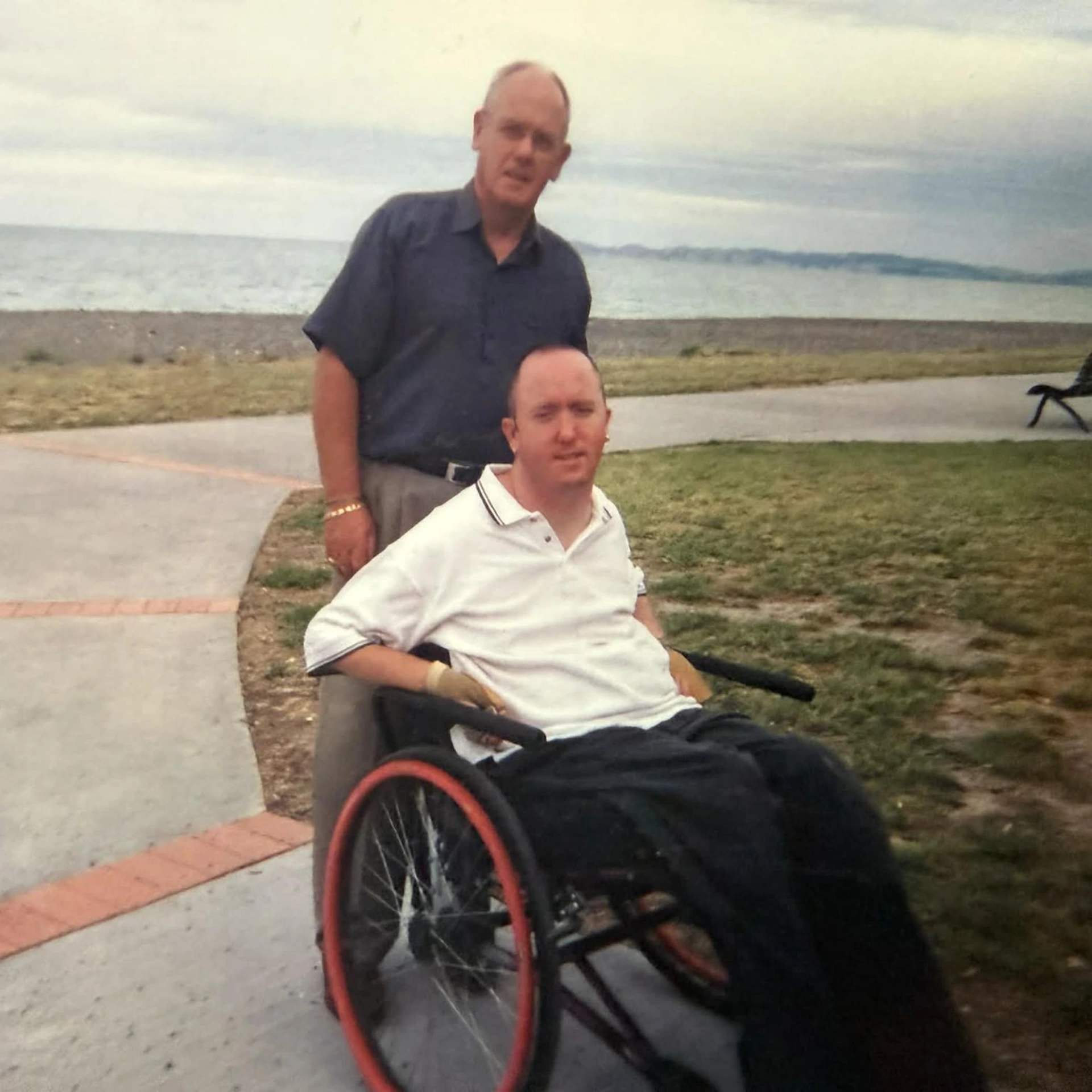
I’m Mark Williams. I live with a C4/C5 complete spinal cord injury and have relied on others for transfers and care for nearly four decades.
Alongside my own experience, I work as National Sales Manager at HT Systems, supporting families and caregivers to find safer, more dignified ways to manage daily life.
I know what it’s like for parents to become caregivers overnight — and what years of lifting can quietly take from the people you love. Getting a hoist isn’t giving up; it’s protecting carers, preserving relationships, and keeping care safe.
In this post, I share what life with tetraplegia has really taught me — and why the Kera hoist has become one of the most important tools in my world.
Because choosing a hoist isn’t about surrender.
It’s about protecting everyone involved.
To the Mums and Dads Who Lift Without Question
When I came home from hospital at sixteen, my parents did what my caregivers do now.
That was 1987. Parents weren’t supposed to be landed with round-the-clock responsibility for a young man who should have been finding his independence and stepping into adulthood. But that’s exactly what happened.
In hospital I had 24-hour care. The day I came home, it dropped to three hours a day. The rest fell to Mum and Dad.
They were shown how to do standing transfers and told it would work. And for a while, it did. I was young. I was light. My body coped.
They got me up every morning, took me out into the world, and made sure life kept moving. Every single night, my dad lifted me into bed — a full standing transfer, every time. He was strong, capable, and it never felt reckless. We never thought he was risking his health. We simply made it part of the family rhythm. Over months and years, it started to feel normal.
Back then, hoists were never part of the conversation. No one from the spinal unit mentioned them. ACC didn’t bring them up. Parents were simply expected to step in and carry the load — literally. And they did. Quietly. Without complaint. Without ever saying it was too much.
Looking back, the risk is painfully obvious. A hoist wouldn’t have taken love out of those transfers — it would have taken danger out of them. My dad wouldn’t have had to rely so heavily on his own strength night after night. My mum wouldn’t have quietly carried the fear of what might happen if one lift went wrong.
This isn’t a story about blame. It’s a story about what families were once expected to carry — and what families today no longer have to.
What I Know Now
It wasn’t until I was in my forties that I finally started using a hoist consistently. Even then, it took a caregiver injuring her knees (on another job) for us to fully commit to it. That was the turning point — when lifting stopped being something we just pushed through and became something we actively protected ourselves against.
The truth is simple:
Equipment doesn’t replace care. It protects the people who give it. It preserves relationships. It removes unnecessary risk. It lets love stay love — instead of quietly turning into injury.
To Today’s Mums and Dads
If you’re a parent caring for a child or young adult with complex needs — especially someone who can’t assist with transfers at all — I see you.
I know the instinct to just get on with it. I know how easy it is to put your own body last. I know how heavy it feels to think, “We’ll deal with equipment later.”
But later arrives faster than you expect.
You don’t have to carry the same physical and emotional load my parents did. Modern hoists aren’t about giving up — they’re about protecting yourselves so you can keep being there for the long haul.
They ease the stress of every transfer. They dramatically reduce injury risk. They let you sleep at night knowing you’re not slowly breaking your own body while caring for someone you love.
From Someone Who’s Lived Both Worlds
I wouldn’t be here without my parents. They were my first caregivers, my safety net, my strength — the unsung heroes of my survival. My dad has now passed away, and I support my mum from a distance even though we haven’t lived together for decades. Because that’s what families do.
If sharing this story helps even one mum or dad avoid an injury — helps one family keep more control, more choice, more dignity — then it’s worth telling.
You don’t have to do this the hard way anymore.
A Better Way Forward — The Kera Hoist
If one piece of equipment could have changed parts of my early story, it’s the Kera Hoist from HT Systems.
This isn’t a traditional ceiling-track hoist or a sling system that requires wrestling and two people. The Kera uses innovative sit2sit™ technology — a modern, one-person lifting solution designed for real homes and real lives in 2026.
It’s built for people who have little or no ability to weight-bear or assist — and for the families and carers who support them.
The Kera brings:
- Safer, controlled, stable transfers that dramatically reduce physical strain
- True single-caregiver operation — no need for extra help
- No difficult sling fitting — transfers become smoother and quicker
- Protection for carers’ bodies and peace of mind for everyone
- Preservation of dignity — each move feels supported rather than struggled
- Easy fit into real homes — bedrooms, living areas, everyday spaces
We also offer the Kera Travel — the lightest, most portable hoist available — so you can rediscover holidays and freedom away from home.
This is the hoist system spinal injury care deserves in 2026: equipment that doesn’t just lift bodies, but empowers lives. It lets you live with confidence instead of quiet fear, and it makes daily care safer for everyone involved.
You Have Options — Let’s Talk
In New Zealand, hoists like the Kera are often funded through ACC or Te Whatu Ora / DHB equipment services, depending on individual circumstances. Internationally, we are NDIS-accredited in Australia and have distributors in the USA, Canada and the UK — we ship worldwide.
You don’t need to have everything figured out before you reach out. We’re happy to have a no-pressure conversation: explain how funding usually works, answer your questions, suggest what to ask your case manager, or arrange a home demonstration so you can see the Kera working in a real environment.
Sometimes just knowing what’s possible is enough to lift a little of the weight.
I’m not here to tell you how to care for your family. I’m just here to remind you that safer, kinder options exist — and that planning for the future isn’t giving up. It’s being realistic, and gentle, with everyone involved.
Especially as bodies age — both the person in the wheelchair and the people who love and lift them.
Mark Williams is a Kera Travel user, Investor and National Sales Manager at HT Systems.
Want to see if a Kera sit2sit hoist is the right solution for you:
They’ve genuinely changed my life—and, just as importantly, helped me prepare safely and confidently for what’s coming next.
